

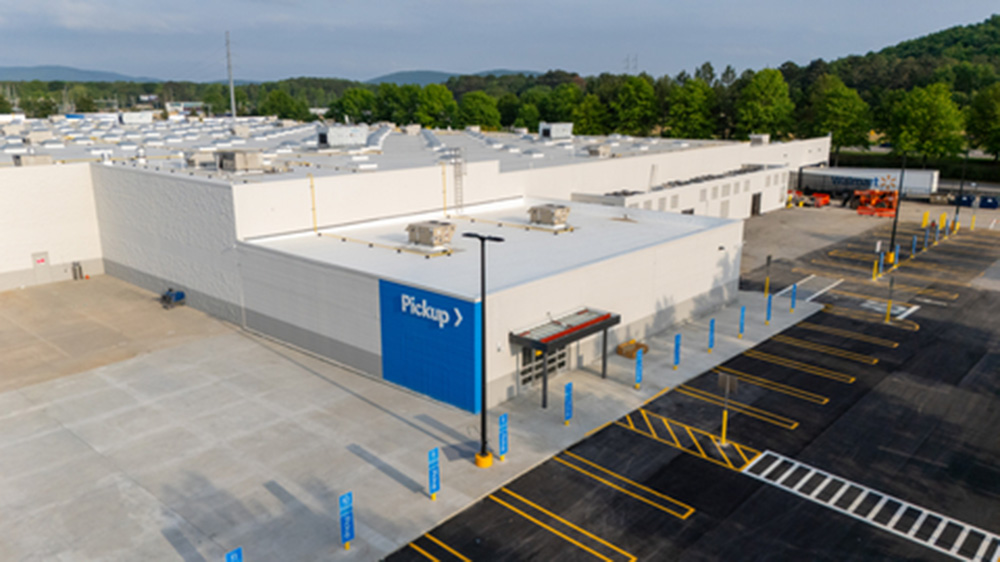
Earlier this year, retail giant Walmart and 3D printing construction company Alquist 3D completed a 5,000 square-foot 3D printed concrete expansion to the Owens Cross Roads, Alabama store. Here’s what you need to know about this innovation.
Who is Alquist 3D?
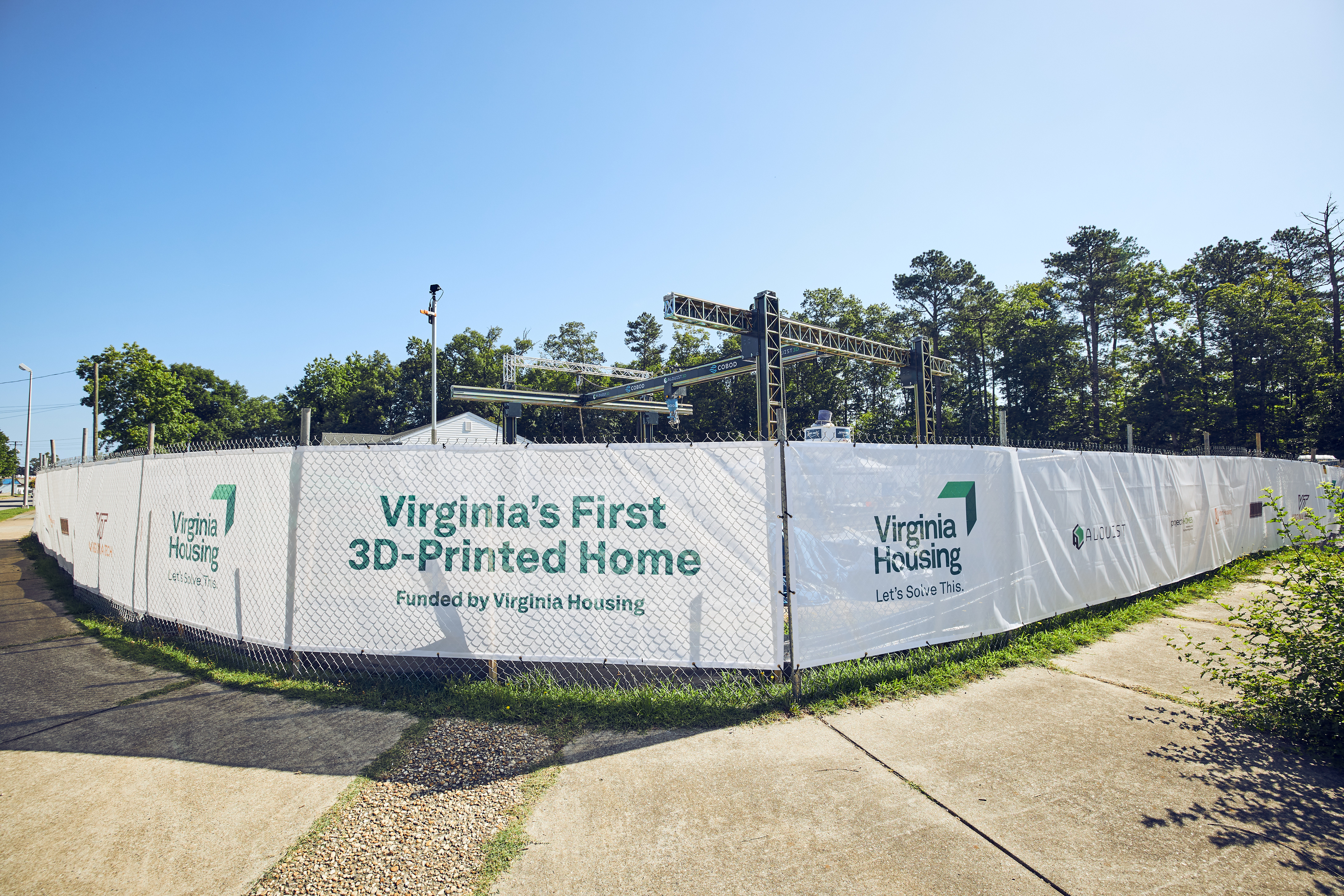
Alquist 3D began in 2020 after founder Zachary Mannheimer was awarded a grant from Virgina Housing and partnered with Fort Myers Technical College to form the company. In the five short years since the company’s formation, it has grown from the first 3D printed house in Virginia to two major construction projects for the retail giant Walmart, one in TN completed in 2024, and the second completed in May of 2025 in Owens Cross Roads, AL.
Before taking on the large-scale projects with Walmart, Alquist completed several smaller private home projects. In 2022 the company completed Virginia’s first 3D printed home in Richmond, VA. From there several other homes were completed using Alquist’s technology, one in collaboration with Habitat for Humanity.
Order Heavy Equipment Parts Online 24/7
Visit the ConEquip Online Store
Search by part number or machine model for fast results.
How Does 3D Concrete Printing Work?
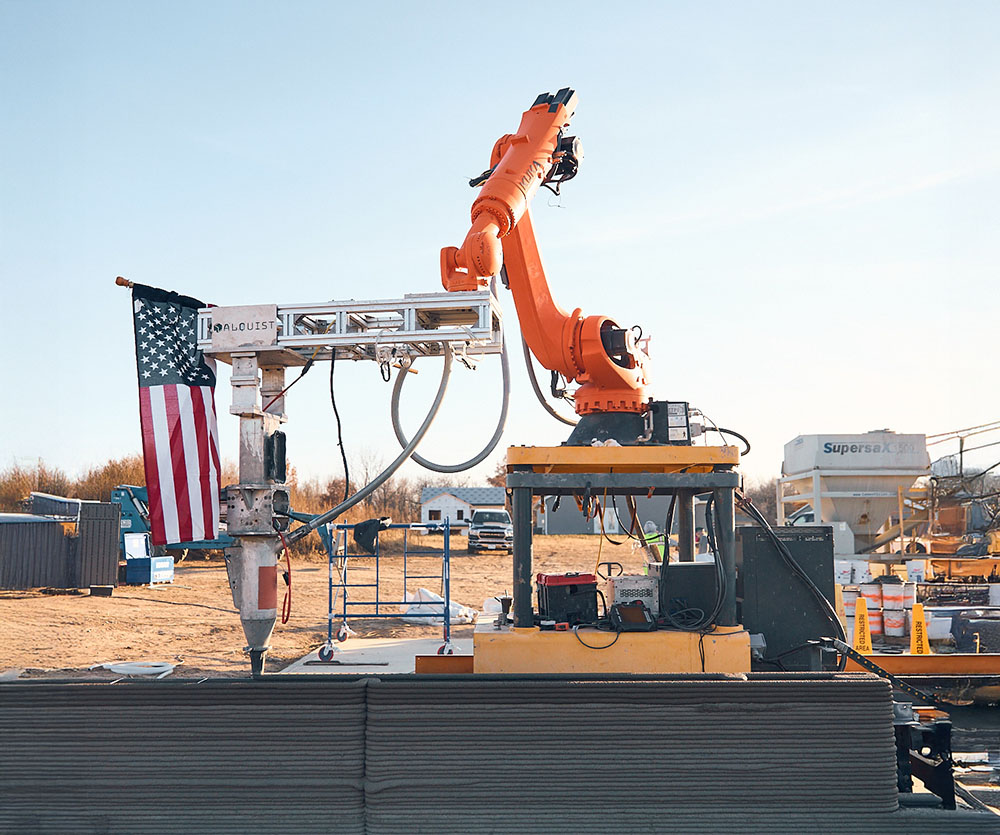
Alquist employs propriety 3D concrete printing technology in the form of their A1 system robots. The pair of robots work much the same as a traditional 3D printer; specialized concrete material is fed into the machines and nozzles lay down layer after layer of the concrete to build up the walls. While this particular project was a commercial building, the technology has also been utilized for general infrastructure or city planning purposes in the form of public planters and benches and other beautification projects. In these civil projects, planters and other infrastructure is printed in a warehouse and moved later into their permanent locations.
While it is often called 3D printing, the technology has its roots all the way back in the early 20th century, when a process called slip forming was pioneered to quickly create concrete cores for skyscrapers, grain silos, and grain elevators. These methods differ in the use of a mold and the consistency of the material used. Slip forming requires concrete that is both fluid enough to be compacted, but quick setting enough to be released from the mold in a timely manner. 3D printed concrete doesn’t require a mold, so the flow consistency through the printer nozzle takes priority. Too runny of a mix and the concrete won’t stay where it’s printed, but too thick of a mix can clog the nozzle and create major delays in the project.
Can’t Find Your Part Online?
Request a Quote from Our Experts
We have access to over 10 million parts not listed in our store.
What are the Benefits of 3D Concrete Printing?
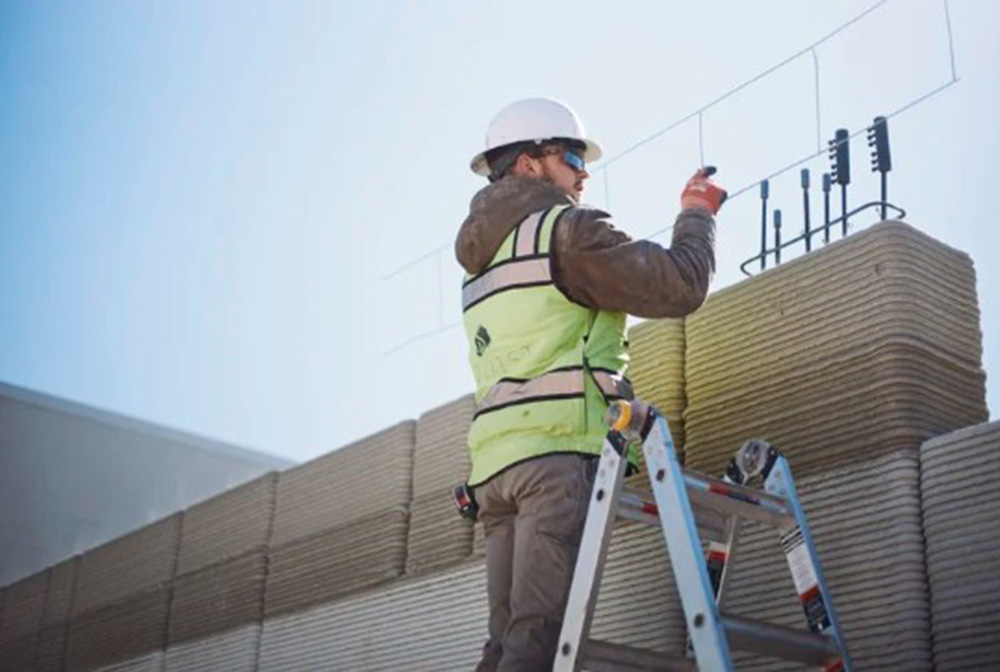
The major benefit is cost and material savings over traditional construction methods. The Walmart completed in May was created in 7 printing days, with a total of 75 operating hours, which is significantly—around 50%–faster than traditional methods. In an industry where time is money and is often one of the most pressing concerns, utilizing 3D printing can greatly reduce the cost of labor on a job by reducing the timeline overall. The Walmart expansion took only 5 Alquist employees to manage the printers and complete the project. The printers were also able to run during weather that would’ve otherwise halted traditional concrete block construction.
The other major benefit that 3D concrete printing has over traditional methods is the reduction materials. Even by Alquist’s estimations this Walmart expansion came in under budget for materials, utilizing only 94 bags of the specialized concrete mix rather than the 130 allocated for the project. This also marks a significant improvement over the previous expansion projects for the big blue retailer. This project had a 15% building cost reduction and produced 55% less waste from the Athens, TN facility completed in 2024.
Order Heavy Equipment Parts Anytime
Browse the ConEquip Online Store
Find parts fast, start with make, model or part number.
What Does This Mean for Construction?
Just as slip forming revolutionized the construction of skyscrapers a hundred years ago, 3D concrete printing is poised to shift the industry towards automation. Concrete as a material has always been the backbone of construction since ancient Rome, but with this new method of laying the material, timelines and material costs are set to shrink. It’s best to expect that this building method will expand and become more and more commonplace given the benefits. As it was said by Patrick Callahan, CEO at Alquist 3D.
“In a commercial construction world that pays so much attention to project timelines and costs, our work with Walmart shows that 3D printing isn’t just a novelty-–it’s an innovation ready to scale. With this second project, we’re demonstrating how retail expansions can be faster, more cost-effective, and less wasteful, paving the way for broader adoption in large-scale builds.”

No Call Needed—Just Click and Buy
Order Heavy Equipment Parts Online
Simple checkout, live inventory, and 24/7 access to parts.


