
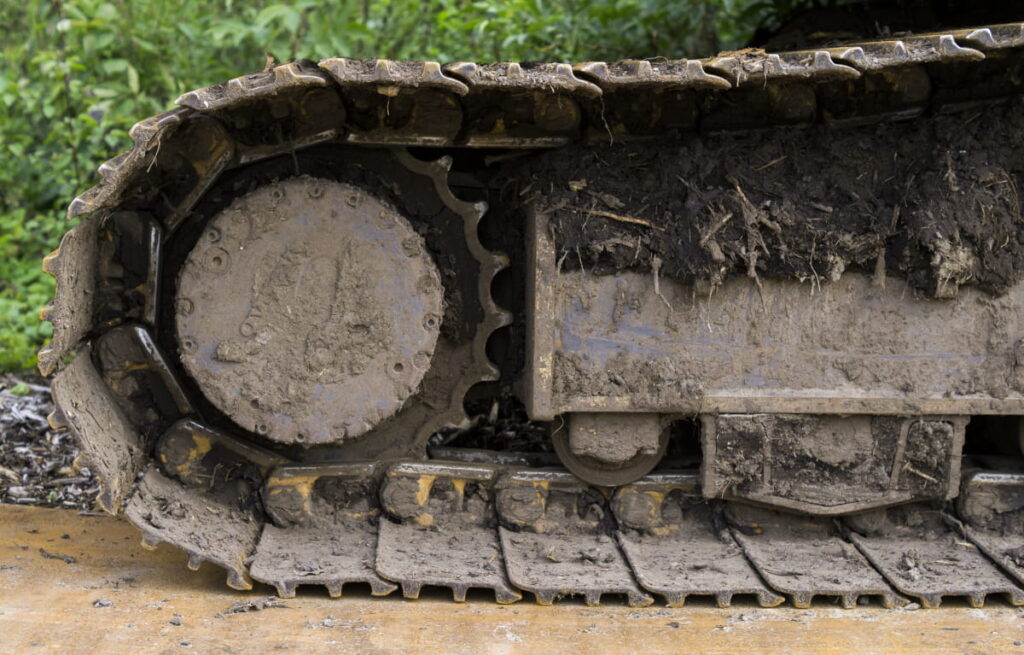
The
final drive
is one of the most essential components on any tracked heavy machine. Without a functioning final drive, your excavator or crawler equipment is not moving. This gear hub transfers power from the travel motor to the sprocket, allowing the machine to move under load. One of the best ways to protect your final drive is by regularly checking and changing the oil. Routine maintenance prevents overheating, gear damage, and costly downtime.
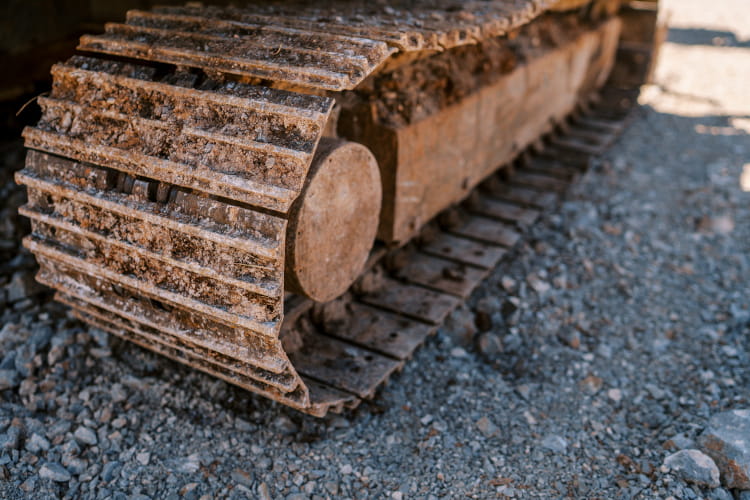
Why Final Drive Oil Maintenance Matters
Final drives operate under extreme torque and constant load. The gear oil lubricates planetary gears, bearings, and internal components while helping dissipate heat. When oil levels drop or contamination enters the hub, internal wear accelerates quickly.
Ignoring oil maintenance can lead to overheating, gear damage, bearing failure, and complete drive replacement. Compared to the cost of a new
final drive
, routine oil checks are inexpensive protection.
- Reduces internal gear wear
- Prevents overheating
- Extends planetary gear life
- Protects bearings and seals
- Reduces risk of catastrophic failure
Need Help With a Leaking Final Drive?
1-716-836-5069
Talk to a parts specialist who knows your machine.
Breakdown Parts Diagram
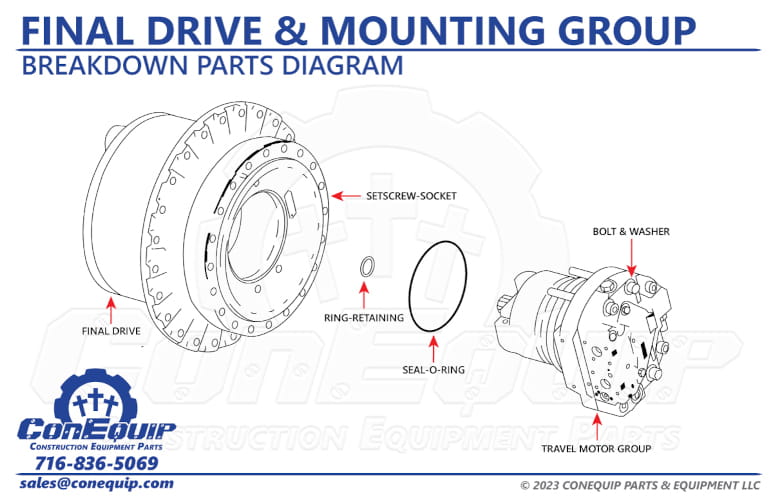
Understanding Final Drive & Mounting Components
A final drive assembly contains gears, seals, and mounting components that transfer power from the travel motor to the sprocket. Understanding these parts helps you spot leaks or wear before major failure occurs.
- Final drive housing and planetary gear system
- Travel motor group
- Retaining ring and internal supports
- O-ring and sealing surfaces
- Mounting bolts and washer hardware
Contains the internal gears and bearings responsible for torque multiplication.
Hydraulic motor that delivers rotational force into the final drive assembly.
Secure internal components and maintain structural integrity under load.
Prevent oil leakage and contamination from entering the gear hub.
Secure the final drive to the track frame and motor group.
Oil Level Inspection
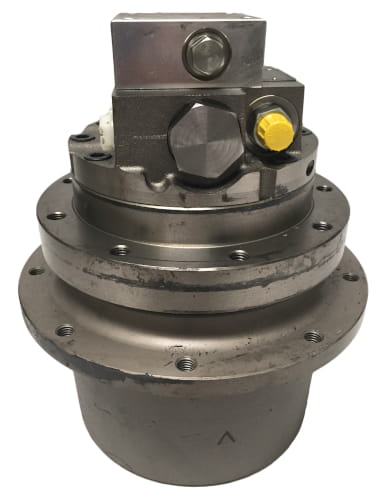
How to Check Final Drive Oil Level
Checking final drive oil is a simple maintenance step that helps prevent internal gear damage and costly repairs. Because the drive operates under heavy torque and constant load, low oil levels quickly increase heat and accelerate wear.
Routine inspections help catch leaks or contamination before they become major failures. A quick check every 100 hours or once a month can significantly extend final drive life.
- Position the drive correctly
- Clean around the plugs
- Check oil level
- Reinstall plugs securely
Rotate the final drive so one plug sits at 12 o’clock and another at 3 or 9 o’clock.
Remove dirt and debris before loosening plugs to prevent contamination.
Oil should be level with the horizontal plug. If low, add oil through the top plug until it begins to drip from the side plug.
Once oil level is correct, reinstall and tighten plugs properly.
How to Change Final Drive Oil
Warm the drive before draining to make thick gear oil easier to remove. Rotate the drive so one plug is at 6 o’clock and one at 3 or 9 o’clock.
While refilling, inspect for leaks around the mechanical seal between the sprocket and track frame. Leaks in this area can indicate serious internal damage.
- Open bottom plug first to drain
- Vent side plug to improve drainage
- Inspect oil for metal flakes
- Rotate drive to 12 and 3 o’clock for refill
- Fill until oil exits horizontal plug
- Do not mix different oil types
Seeing Metal Flakes in Your Oil?
1-716-836-5069
We supply replacement final drives and components fast.
Signs Your Final Drive May Be Failing
These symptoms often indicate internal gear wear, bearing failure, or seal damage within the final drive assembly. Catching these warning signs early can prevent complete drive seizure, costly downtime, and additional damage to related components such as the travel motor or sprocket.
If you notice persistent leaks, abnormal noises, or contamination in the oil, it is recommended to inspect the drive immediately and consider replacement before total failure occurs. Addressing the issue early is significantly less expensive than repairing a fully damaged final drive system.
- Oil leaking near sprocket
- Grinding or clicking during travel
- Reduced travel power
- Metal flakes in drained oil
- Excessive heat from drive housing

Need a Replacement Final Drive?
1-716-836-5069
Call now and get matched with the right final drive for your machine.


