
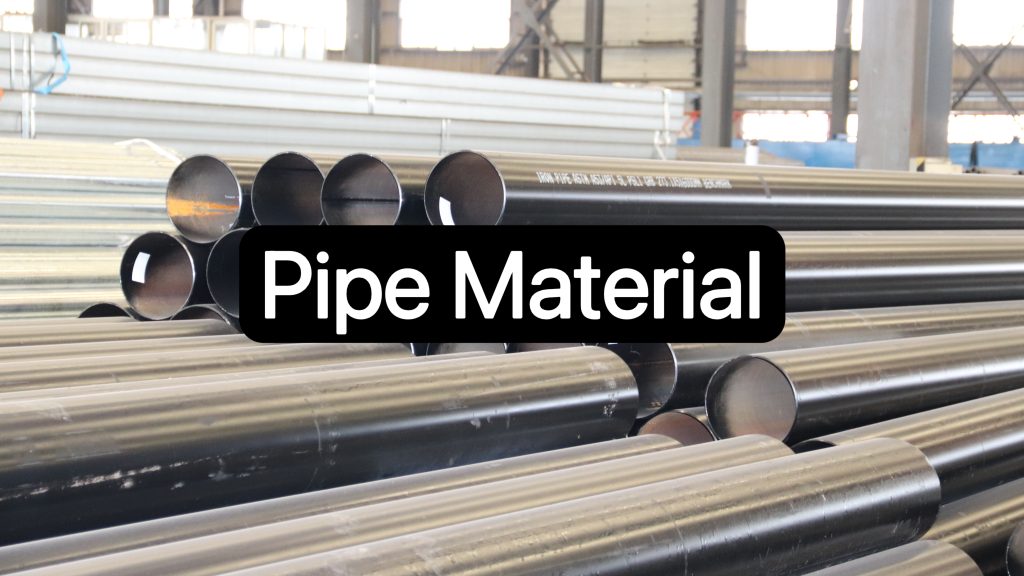
Importance of Pipe Material and Industry Demand
Pipeline materials are an important part of industrial, construction and energy systems, and the performance of materials can directly affect the safety and benefits of the entire system. For example, the petrochemical industry uses high-temperature resistant carbon steel pipes to transport high-temperature media, and in municipal engineering, HDPE pipes are used to prevent leakage. However, the scenarios are very complex and changeable, so how to scientifically select the right pipeline material has become the biggest challenge facing decision makers.
Pipe Material Core Types and Features Comparison
Metal Pipe Materials
Carbon steel (ASTM A106): Carbon steel is very suitable for use in high pressure (>10MPa) and high temperature (≤450℃) environments, so this material is widely used in process pipelines in refineries. The strength and durability of carbon steel pipes are excellent under extreme conditions, but they need to be combined with an inner lining anti-corrosion layer to prevent medium erosion.
Stainless steel (316L): It is widely used because of its excellent chromium-nickel alloy composition and its resistance to chloride ion corrosion. It is used in food processing, offshore platforms and other fields.
Plastic pipe materials
PVC/CPVC: This material is very low in cost and very resistant to acid and alkali, suitable for laboratory wastewater discharge systems, but in the case of long-term use, the temperature must be controlled below 60°C.
HDPE: This material is widely used because of its high flexibility, so it is very suitable for use in earthquake zones, reducing the risk of pipeline damage due to natural disasters.
Composite material pipes
FRP (glass reinforced plastic): The density of this material is very low, only one-fourth of that of steel, which reduces the structural burden and has excellent fatigue resistance.

Key factors for pipe material selection
Working environment analysis
Temperature and pressure : Carbon steel pipes are prone to embrittlement in low temperature environments (such as less than -20°C), so it is recommended to choose austenitic stainless steel or nickel-based alloys in low temperature environments.
Medium corrosivity: Different chemical media have very different corrosive properties to materials. It is recommended to choose fiberglass reinforced plastics (FRP) or polypropylene (PP) materials for conveying salt.
Cost and life cycle assessment
Initial cost: The initial cost of PVC pipes is about one-fifth of that of stainless steel pipes, so PVC materials can be selected if the budget is limited in the initial stage, but PVC may need to be replaced after ten years, and the subsequent maintenance and replacement costs must also be considered comprehensively.
Maintenance cost: Although the initial cost of galvanized steel pipes is low, the maintenance cost is very high to prevent corrosion, and the annual maintenance cost may account for 15% of the total cost.
Compliance requirements
ASME B31.3: The wall thickness of the process pipe must match the design pressure according to Sch. No. (such as Sch 40/80)
ANSI NPS standard: The nominal diameter (such as NPS 8 corresponds to an outer diameter of 219.1mm) must be consistent with the flange and valve specifications


